Thursday, September 22, 2016

Offers Root Canal (Endodontics)

1


Endodontics is the dental specialty that deals with the nerves of the teeth. Root canals are probably the most notorious procedure in dentistry and the most common procedure relating to endodontics. When a tooth becomes infected it is usually related to the nerves in the root of the tooth. The infected nerves need to be removed. If left untreated an infection can turn into an abscess, which is a much more serious problem that includes bone loss in the jaw.

The area around the tooth is numbed with a local anesthetic to start the procedure. The Dentist will then drill down into the tooth to create an opening into the canal. They will then be able to remove infected tissue and clean the canal. After the infection has been removed, the space if filled with a sealant called gutta percha. It is highly recommended that a tooth that has undergone a root canal is fitted with a crown. This will improve the appearance of the tooth, and will also make it much more likely that the root canal is successful.

Root canal” has become a scary term for dental patients to hear, but the benefits of the procedure and advances in dental technology have made it much less “scary”. Local anesthetics and proper pain medication allow the procedure to be performed with little to no pain in most cases. There may be some soreness following the procedure, but that is normal for most dental procedures. Over the counter painkillers are usually enough to relieve any pain afterwards, but your dentist may prescribe medication. The procedure will also relieve you from pain caused by the infection allowing you to enjoy all the foods you love without any pain from heat, cold, or biting too hard. If you are experiencing pain consult your dentist today.


Wednesday, September 14, 2016

Offers Crown Lengthening

1


When decay occurs below the gumline, it may be necessary to remove a small amount of bone and gum tissue. Your Dentist may ask for this procedure before he or she makes a new crown for your tooth.

Crown Lengthening procedures are done for both Restorative Dentistry and/or to improve the esthetics of your gum line. General practitioners often refer for crown lengthening procedures prior to restoration of broken or severely decayed teeth. This procedure adjusts the gum and bone level to expose more of the tooth so it can be restored.

Sometimes crown lengthening is done to improve a “gummy” smile because the teeth appear short. The teeth may actually be the proper length but excess gum tissue may be covering these teeth. During this procedure, excess gum and bone tissue is reshaped to expose more of the natural tooth.

Monday, August 29, 2016

Offers Inlays/Onlays

1


Inlays and Onlays are often referred to as partial crowns. They use the existing tooth as a base and fit the inlay or onlay onto the tooth. This is done to strengthen the tooth, restore its shape, and prevent further damage. An inlay is done when there is no damage to the cusps of the tooth and the inlay can be placed right on the tooth. An inlay is used when the damage is a little more extensive.

The decayed area of the tooth is first removed during the procedure. A mold of the tooth is then taken and sent to a dental lab. They create a restoration made from porcelain, gold, or a composite resin. The restoration takes about 2-3 weeks to make, so a temporary inlay or onlay will be placed on the tooth for that time. During your next visit the inlay or onlay will be placed into your mouth and set with cement. Your tooth will look natural and you or anyone else won’t be able to tell the difference.

Thursday, August 18, 2016

Offers Veneers

1


Veneers are an excellent way to redesign and reshape your entire mouth. Veneers are a very thin ceramic shell that covers your existing tooth structure. In placing these new veneers on your teeth, you are able to fix the look of issues such as staining, cracked teeth, spaces, misaligned teeth, chipped teeth and many other issues.

In terms of the process to place veneers, it is a process that takes approximately two to three visits. In the first visit, we will discuss the new shape and look of what we are going to accomplish by placing the veneers. Once we have put a plan in place, we will carefully prepare the teeth for the placement of the new veneers. As we complete this piece of the process, the next step is to take an impression of the newly prepared teeth. This impression will be sent to our laboratory for the final product to be fabricated. We only utilize the highest standard laboratory for fabrication of all of our work. This process at the laboratory takes between 10-14 days. While the new veneers are being fabricated at the lab, we will provide you with a beautiful temporary solution to wear for this time.

As the veneers are finalized, we will make every effort to make sure that your new veneers will feel just like your natural teeth. We will bond them into place ensuring that you can enjoy your new smile for a very long time!

Wednesday, August 10, 2016

Offers Dental Implants

2


Dental Implants are a permanent and appealing solution to replace missing or extracted teeth. They are better than other alternatives like bridges because no additional teeth need to be altered to place the new tooth.

The entire implant process is performed over the course of a few months. The first part of the process is to install the implant itself, where a screw is placed into the jaw bone. An incision is made in the gum so that the implant can be inserted. Multiple implants can be placed at once if necessary. After the implants are placed the gums are sutured.

The implant must be allowed about 3-6 months to heal, and during this time the jaw bone will form around the implant in a process called osseointegration. During this healing time you can have temporary crowns installed so that you can eat and speak normally and maintain a proper aesthetic appearance for your smile.

After the implant has healed it is time to place an abutment on the implant. The abutment serves as the base for your new tooth. One this is placed an impression of the abutment is taken and is used to create your permanent restoration. Some offices have an onsite lab to create the crown, but others will have to send it to an outside lab. Once the restoration is completed you can return to the office to attach the restoration permanently. Your smile will look just like it used to, and after a short period of getting used to the implant it will feel just like one of your own teeth.

Sunday, July 24, 2016

Offers Crowns

1


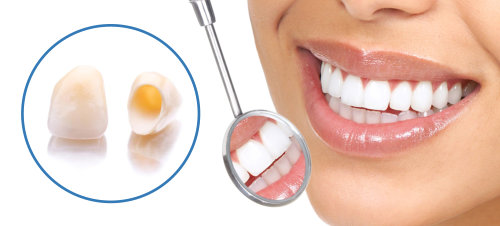
Over time our teeth begin to weaken and become more susceptible to problems such as decay, cracks, discoloration and others. If you feel your smile isn’t what it once was, crowns can help you recover your smile. If your Dentist notices that a tooth is decayed or seems weakened/cracked a crown may be necessary to make sure that there are no additional problems with the tooth. In cases like this a filling or bonding will not be sufficient.

Crowns can be made from porcelain, porcelain fused to metal, or a full gold crown. To maintain a natural look and feel a porcelain finished crown is best, as it can be matched to the shade of your other teeth. This will allow it to blend in and appear just like one of your natural teeth.

The process of installing a crown takes 2-3 visits to the dentist. On the first visit the tooth will be reshaped by filing down the enamel so that the crown can be placed over it. You will be given a local anesthetic before this part of the procedure so that you do not experience any discomfort. Once the tooth has been reshaped, a mold will be taken of that tooth and the surrounding teeth. This mold will be sent to a Dental Lab so that your new crown can be made so that it fits in the spot created for it and looks the same relative to the surrounding teeth. Before leaving, your dentist will fit you with a temporary crown until your permanent crown is ready.

The crown takes about 2-3 weeks to be returned to your Dentist. At this time you will have another appointment to place and fit the permanent crown. You will again have a local anesthetic to numb the area and the tooth will be placed using a cement to ensure the tooth sets in place. When you look in the mirror, you will see your old smile back. Crowns are durable and will usually last about 10-15 years. You should care for it as you would any of your other teeth with regular brushing and flossing. Call us today if you would like to learn more about how crowns can help restore your smile.

Friday, July 15, 2016

Root Planing

1


Often there is plaque and tartar that accumulates below the gum line. In this scenario, we will clean and smooth this area with special instruments to ensure that the area is completely spotless. If this area is not kept clean the entire area can become irritated with the bacteria that resides in the tartar and plaque. It’s very important to have your dentist check this area if you have bleeding during brushing.